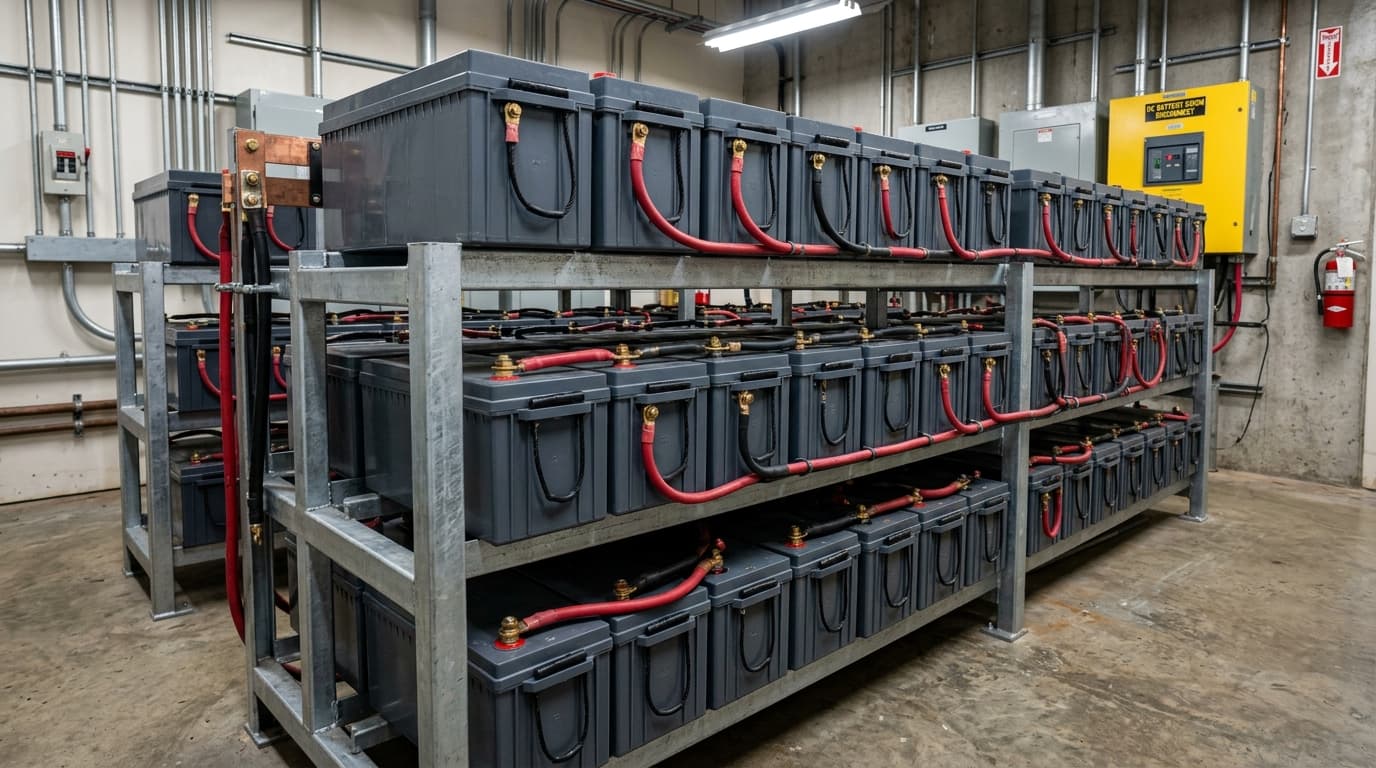
VRLA AGM vs. Tubular vs. LiFePO4 Lithium Batteries: Complete Selection Guide
Engr. Lemon Mia
Head of Technical Operations & Power Systems · TNS Engineering Ltd.
Executive Summary
Selecting the right battery technology for your IPS or UPS in Bangladesh determines reliability, maintenance overhead, safety, and 10-year operating cost. VRLA AGM batteries (such as Kenson) provide 100% sealed, maintenance-free operation with zero toxic acid fumes—making them ideal for living spaces. Flooded tubular batteries offer 1,000–1,200 cycles but require regular distilled water replenishment and dedicated ventilation. Lithium LiFePO4 represents modern energy storage, delivering 4,000–6,000 cycles, 90% usable capacity, and 3x faster charging.
1. The Three Battery Chemistries in Bangladesh
A. Valve Regulated Lead-Acid (VRLA AGM) — The Zero-Maintenance Standard
VRLA AGM batteries utilize micro-porous glass fiber separators (Absorbent Glass Mat) that absorb and immobilize liquid sulfuric acid electrolyte. During charging, oxygen generated at the positive plate migrates through the separator to recombine with hydrogen at the negative plate, regenerating water inside the cell.
- Zero Maintenance: Never requires distilled water refilling or acid specific gravity checks.
- No Toxic Fumes: 100% safe to install inside bedrooms, living areas, and office cubicles.
- Low Self-Discharge: Can sit in storage for up to 6 months without degrading.
B. Flooded Deep-Cycle Tubular Batteries
Tubular batteries encase positive active material in porous gauntlets, protecting lead plates from shedding during deep discharge cycles. While robust, flooded tubular batteries emit hydrogen gas and acidic vapors during daily charging:
- Requires bi-weekly or monthly inspection and distilled water top-ups.
- Must be installed in well-ventilated utility rooms or balconies to avoid respiratory irritation and explosion risk from accumulated hydrogen.
- Acid mist can corrode nearby terminal lugs, cables, and home tiles.
C. Lithium Iron Phosphate (LiFePO4) — The Modern High-Performance Choice
LiFePO4 is the safest, longest-lasting lithium chemistry available for stationary energy storage. Paired with a Smart Battery Management System (BMS), it monitors cell balance, over-temperature, and short-circuits in real-time.
- Exceptional Lifespan: 4,000 to 6,000 cycles (lasts 10 to 15 years in daily load shedding).
- High Usable Depth of Discharge: Safely discharges up to 90% capacity without degrading cells.
- Ultra-Fast Recharging: Recharges fully in 2 to 3 hours, compared to 10 to 12 hours for lead-acid.
2. Engineering Specification & Performance Comparison
| Feature | Kenson VRLA-SMF (AGM) | Flooded Tubular | Kenson LiFePO4 (LVTS Series) |
|---|---|---|---|
| Cycle Life (@ 70–80% DoD) | 400 – 600 Cycles (3–4 yrs) | 1,000 – 1,200 Cycles (4–5 yrs) | 4,000 – 6,000 Cycles (10–15 yrs) |
| Maintenance Overhead | Zero (Maintenance-Free) | Monthly distilled water top-up | Zero (Smart BMS Monitored) |
| Acid Fumes & Indoors Safety | 100% Sealed, No Fumes | Emits hydrogen & acid mist | Zero fumes, non-toxic |
| Recharging Speed | 8 – 10 Hours | 10 – 12 Hours | 2 – 3 Hours (Fast Recovery) |
| Usable Capacity (DoD %) | 70% recommended | 70% recommended | 90% – 95% usable energy |
| Weight per 100Ah @ 12V | ~30 kg | ~35 kg | ~11 kg (65% lighter) |
3. Temperature Derating in Bangladesh
According to the Arrhenius electrochemical rate law, every 10°C increase in ambient operating temperature above 25°C cuts the chemical lifespan of lead-acid batteries in half. In Bangladesh, where summer ambient room temperatures frequently reach 35°C–38°C, lead-acid batteries age rapidly if overloaded or placed in unventilated enclosures.
LiFePO4 lithium batteries possess significantly wider operational thermal tolerances (operating up to 55°C without chemical degradation), making them exceptionally reliable in tropical Bangladesh environments.
4. Choosing the Best Option for Your Application
- Standard Homes & Apartments: Choose Kenson VRLA-SMF Deep Cycle Batteries (12V 130Ah–200Ah) for convenient, safe, spill-proof indoor operation with zero water maintenance.
- Dedicated Plant / Balcony Setups: Tubular batteries offer good cyclic durability if you have a dedicated ventilated area and don't mind periodic maintenance.
- Commercial Enterprises, Server Racks & High-End Solar: Invest in Kenson LVTS LiFePO4 Lithium Modules (12.8V, 25.6V, 51.2V) for lowest 10-year total cost of ownership and rapid recharging between successive load-shedding cycles.
Explore Kenson VRLA & Lithium Battery Catalog
Supplied with genuine distributor warranty and nationwide technical support by TNS Engineering.
Need Custom Load Sizing or Engineering Consultation?
Our Dhaka technical team provides Single Line Diagram (SLD) reviews, battery bank sizing calculations, and industrial harmonic audit consultations for factories, hospitals, and homes across Bangladesh.